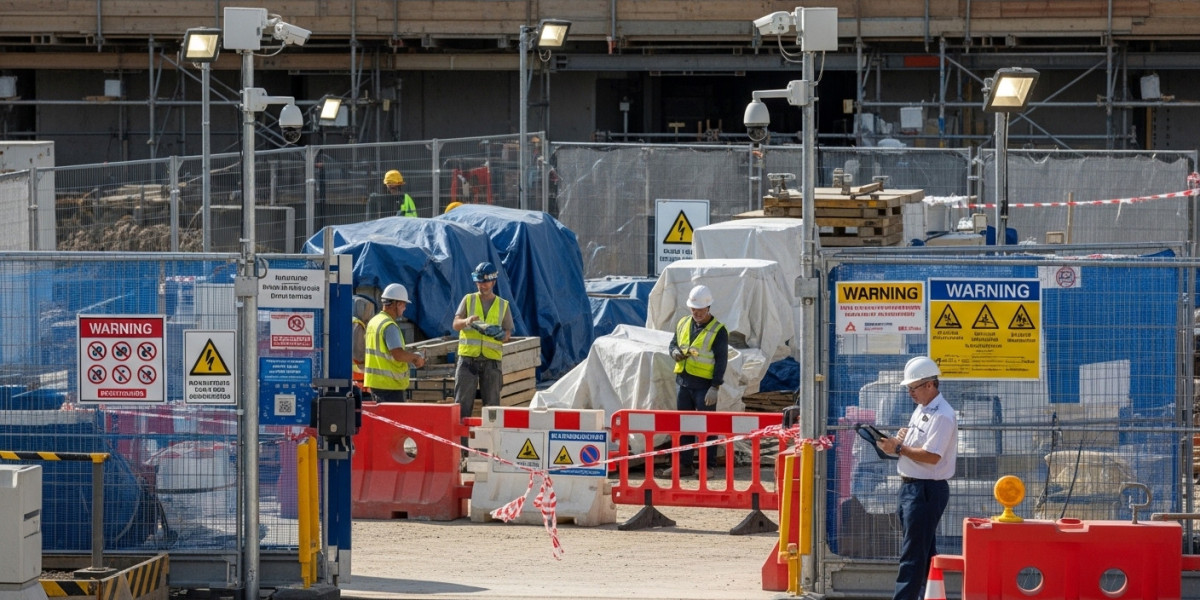

The dilemma of ensuring a construction site is safe against theft, safety breaches, and unauthorized entry is of concern to nearly 68 % of construction managers. Construction site security is a mixture of physical site security, access control, risk assessment, and persistent security to prevent theft, accidents, and unauthorized access.
Without proper planning, projects can be delayed and run at a loss, and be unsafe. It entails risk assessment, access controls, surveillance, and precautions.
This process provides complete site protection plans in order to be capable of guaranteeing safety, risk management, and to ensure that the construction process occurs without any hitch.
Understanding The Significance Of Construction Site Security
Construction sites are very dynamic areas where machines, materials and workers are ever on the move. Due to this, they turn out to be high-risk areas.
In the absence of proper protection measures, the following are some of the common issues:
Material theft
Equipment damage
Worker injuries
Unauthorized entry
Project delays
Thus, the issue of safeguarding construction sites is not only a question of security but a fundamental aspect of project management.
The Role Of Accurate Planning In Site Safety
Planning and estimation of construction projects have a direct impact on the protection of the site. When it is evident what is planned, the risks are faced at an early stage. In this case, the construction estimates are used, which provide the estimation of cost, material calculation, volume analysis, and project planning. This is done to ensure that there is proper allocation of resources and unnecessary exposure is minimized.
How To Protect A Construction Site: Step-By-Step Process
1. How To Conduct A Site Risk Assessment
The initial one is risk identification. Each environment of a site is unique.
Assess the following:
Location risk (urban or remote area)
Material value
Workforce size
Weather exposure
Entry points
Example:
There are very high chances of theft in the sparsely populated areas and a high likelihood of unauthorized access in cities.
2. Physical Barrier And Perimeter Control
To appropriate a site, limits should be figured out.
Use:
Fencing systems
Controlled gates
Locked entry points
These obstacles do not give access to unauthorized individuals to enter and give specific limits.
3. Use Of The Access Control Systems
Access control implies that only authorized persons are allowed to enter.
Common methods include:
Worker ID verification
Maintaining entry logs
Time-based access
This enhances accountability and ease of tracking.
4. Monitoring and Surveillance Arrangement
To a great degree, constant checks are as secure as possible.
Include:
CCTV coverage
Night monitoring
Activity recording
Surveillance will help in detecting suspicious activities and evidence where required.
5. Significance of Lighting Systems
Poor lighting compromises the security.
Ensure:
Access points are not black.
It is possible to see storage places.
Adequate lighting of night shifts.
Lighting reduces accidents and discourages theft.
Effects of External Support Estimation
Another approach to outsource estimatings of complex projects is the method in which the cost estimation, material estimation, and volume estimation are performed by outside specialists. This increases the precision of planning and is applicable in the identification of vulnerabilities of a site at the early planning stages, which would form part of the overall protection strategy.
Material/Equipment Protection Strategies
How to Plan Storage
Materials are not safe in terms of location.
Follow these practices:
Designated storage zones
Covered storage areas
Locate places of high value that are safe.
Equipment Handling Protocols
It is not safe to leave heavy equipment without an attendant.
Best practices include:
Lock-up parking.
Daily inspection
Maintaining usage logs
Safety And Control Of Worker Behaviour
Safety Training Role
The employees should be trained about risks.
Training should include:
Emergency response
Equipment handling
Site rules
Monitoring Safety Compliance
It is important to make rules, not to break them.
Monitor:
Use of protective gear
The privilege to limited access zones.
Safe work practices,
Emergency Response And Preparedness Planning
The Development Of The Emergency Plan.
Each site is supposed to have an emergency plan.
Include:
Fire response
Medical emergencies
Evacuation routes
Conducting Regular Drills
Practice exercises make workers alert.
Example:
Fire drills enhance the response time and suppress panic.
Legal and Compliance Issues
Following Safety Regulations
The law dictates that construction sites must be in line with the law.
Ensure:
Safety standards are adhered to.
The protection laws of workers are enforced.
Preparedness inspection is ensured.
Maintaining Documentation
Good record-keeping is important.
Include:
Incident reports
Safety logs
Inspection records
Common Mistakes in Protecting Construction Sites
Avoid:
Open access points
Poor communication
Lack of supervision
Inconsistent monitoring
Such errors render the site susceptible and expose it to risks.
High-Level Protection Methods Of Better Sites
Technology Integration
Technology is used in the current construction sites to increase control.
Examples include:
Digital access logs
Automated monitoring alerts
Real-time tracking systems
Continuous Improvement Approach
Protection of sites is not a one-time affair.
Regularly:
Reassess risks
Update systems
Analyze feedback
Conclusion
Site protection is vital to the success of construction projects. Securing a construction site does not always mean the fencing or guarding, but the establishment of a structured program which includes risk evaluation, access regulation, monitoring, and compliance with safety standards.
This framework has outlined a manner in which planning, management of resources, and training of the workers work together to provide a safe environment. When all the elements are properly applied, accidents, theft, and delays are minimized to the maximum.
Finally, not only is a secure construction site safer, but also more efficient and credible in the long-term, inviting the question of whether all projects keep their security plan in mind.
FAQs
What Are The Ways Of Securing A Construction Site Against Theft?
Controlled access, good lighting, and a secure storage system should be used to prevent theft. Frequent monitoring and tracking of entries also minimizes unauthorized activities.
What Is To Be Contained In A Construction Site Safety Plan?
A good safety plan consists of risk assessment, emergency procedures, worker training, and monitoring of compliance with safety. These factors provide an organized and safe location.
Why Is Access Control Important In Construction Site Security?
Access control makes sure that only authorized people can gain access to the site. This enhances accountability and greatly lessens the chances of security breaches.