
The global anti-acne cosmetics market is witnessing significant expansion, driven by increasing consumer awareness regarding skincare, rising acne prevalence, and the growing influence of social media beauty standards. Acne remains one of the most common dermatological concerns, particularly among teenagers and young adults, which continues to fuel demand for targeted cosmetic solutions. As a result, manufacturers are focusing on innovation, natural formulations, and dermatologically tested products to cater to evolving consumer preferences.
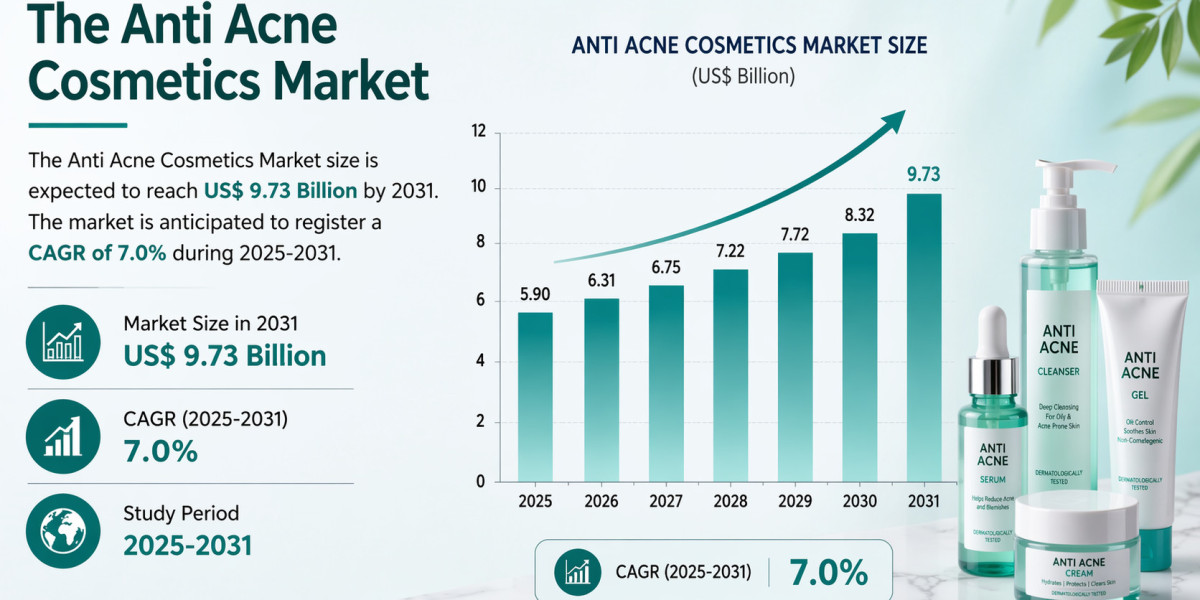
In terms of Anti-Acne Cosmetics Market growth analysis and Trend, the market is experiencing a shift toward personalized skincare, clean-label ingredients, and multifunctional products. Consumers are increasingly seeking products that not only treat acne but also provide additional benefits such as hydration, oil control, and anti-aging properties. The Anti Acne Cosmetics Market size is expected to reach US$ 9.73 Billion by 2031. The market is anticipated to register a CAGR of 7.0% during 2025-2031. Moreover, the rise of e-commerce platforms and influencer-driven marketing has amplified product visibility and accessibility, further accelerating market growth. According to industry insights, the market is projected to witness robust expansion due to increasing disposable income and growing interest in premium skincare products.
Get Sample PDF @ https://www.theinsightpartners.com/sample/TIPRE00006862
Market Dynamics Driving Growth
One of the primary drivers of the anti-acne cosmetics market is the rising prevalence of acne across different age groups. Studies indicate that a large percentage of adolescents and young adults experience acne, creating a steady demand for effective treatment products. Additionally, lifestyle factors such as stress, unhealthy diets, and pollution are contributing to skin issues, further boosting product demand.
The increasing awareness of skincare routines and the influence of social media platforms have also played a crucial role in shaping consumer behavior. Beauty influencers and dermatologists are promoting skincare regimens that include anti-acne solutions, encouraging consumers to invest in high-quality products. Furthermore, the growing male grooming segment is expanding the customer base, as more men are adopting skincare routines.
Market Segmentation Insights
The anti-acne cosmetics market is segmented based on product type, end user, and geography. By product type, the market includes creams and lotions, masks, and cleansers and toners. Among these, creams and lotions hold a significant share due to their ease of use and effectiveness in treating acne. Cleansers and toners are also gaining traction as essential components of daily skincare routines.
Based on end users, the market is divided into women and men. While women have traditionally dominated the market, the male segment is growing rapidly due to increasing awareness and changing grooming habits. Regionally, Asia-Pacific is expected to witness substantial growth, driven by a large population base, rising disposable income, and increasing beauty consciousness.
Emerging Trends in the Market
Several key trends are shaping the future of the anti-acne cosmetics market. One of the most prominent trends is the demand for natural and organic products. Consumers are becoming more conscious of ingredient safety and are opting for products free from harmful chemicals such as parabens and sulfates.
Another significant trend is the integration of advanced technologies in product development. Brands are leveraging artificial intelligence and data analytics to create personalized skincare solutions tailored to individual skin types and concerns. Additionally, sustainable packaging and eco-friendly practices are gaining importance as consumers prioritize environmentally responsible brands.
Competitive Landscape and Key Players
The anti-acne cosmetics market is highly competitive, with several global and regional players striving to strengthen their market position through product innovation and strategic partnerships. Companies are investing heavily in research and development to introduce advanced formulations that deliver faster and more effective results.
Top Players in the Anti-Acne Cosmetics Market:
- Clinique
- Proactiv
- Murad
- Neutrogena
- Ancalima Lifesciences Ltd
- Vichy
- La Roche-Posay
- Mentholatum
- Kose
Future Outlook
The future of the anti-acne cosmetics market looks promising, with continuous advancements in skincare technology and increasing consumer demand for effective solutions. The market is expected to benefit from the growing trend of self-care and wellness, as individuals prioritize skincare as an essential part of their daily routine.
Moreover, the expansion of online retail channels and the availability of a wide range of products are likely to enhance market penetration. Companies that focus on innovation, sustainability, and consumer-centric strategies are expected to gain a competitive edge in the coming years.
Related Report:
1) Spasticity Drugs Market Growth, Trends & Forecast by 2034
2) Sulphonamides Market Size, Trends & Demand by 2034
3) Tacrolimus Market Size, Share & Trends by 2034
About Us -
The Insight Partners provides comprehensive syndicated and tailored market research services in the healthcare, technology, and industrial domains. Renowned for delivering strategic intelligence and practical insights, the firm empowers businesses to remain competitive in ever-evolving global markets.
Contact Us:
Ankit Mathur | The Insight Partners
E-mail: [email protected]
Phone: +1-646-491-9876
Also Available in : Korean German Japanese French Chinese Italian Spanish