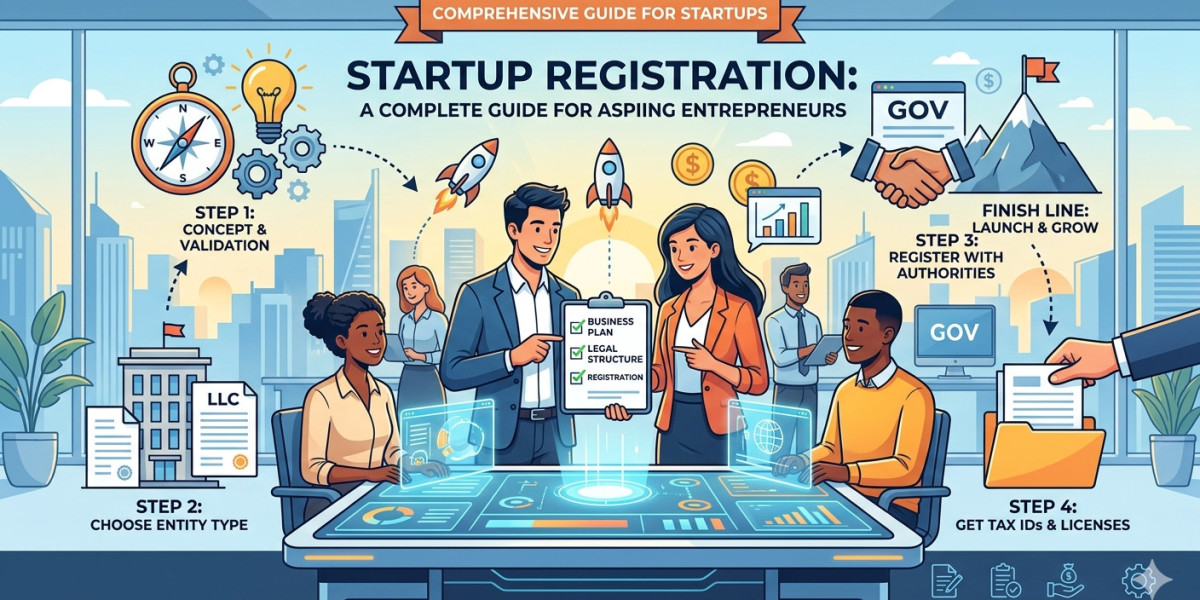

Starting a business involves making several important decisions, and one of the most crucial is choosing the right business structure. Among the various options available, a Private Limited Company stands out as one of the most popular and reliable choices for entrepreneurs and startups.
Fast, Reliable & Online Startup Registration Services Across India
What is a Private Limited Company?
A Private Limited Company is a type of business entity that is privately held and offers limited liability to its owners. This means the personal assets of shareholders are protected, and their liability is limited to the amount they have invested in the company.
It is registered under corporate laws and operates as a separate legal entity from its owners.
Key Features of a Private Limited Company
1. Separate Legal Entity
The company has its own legal identity, which is distinct from its shareholders and directors.
2. Limited Liability
Shareholders are only liable for the amount they invest, protecting personal finances from business risks.
3. Perpetual Succession
The company continues to exist even if the owners or directors change.
4. Restricted Share Transfer
Shares cannot be freely traded publicly, ensuring better control over ownership.
5. Minimum Requirements
Typically requires at least two shareholders and two directors to get started.
Advantages of a Private Limited Company
Credibility and Trust
A registered company structure enhances your brand’s reputation among clients, investors, and partners.
Easy Access to Funding
Private limited companies can raise funds more easily through equity, venture capital, or loans.
Ownership Flexibility
Ownership can be distributed through shares, making it easier to bring in partners or investors.
Tax Benefits
Companies often enjoy better tax planning opportunities compared to sole proprietorships.
Scalability
This structure supports long-term growth and expansion.
Registration Process (Simplified)
Step 1: Obtain Digital Signatures
Directors must have Digital Signature Certificates (DSC) to sign documents electronically.
Step 2: Apply for Director Identification Number (DIN)
Each director must obtain a unique identification number.
Step 3: Name Approval
Choose a unique company name and get it approved by the relevant authority.
Step 4: File Incorporation Documents
Submit documents like:
Memorandum of Association (MoA)
Articles of Association (AoA)
Identity and address proof of directors
Step 5: Certificate of Incorporation
Once approved, you receive the certificate, and your company is officially formed.
Documents Required
PAN and ID proof of directors
Address proof of directors
Registered office address proof
Passport-size photographs
Business address details
Compliance Requirements
Running a Private Limited Company comes with certain responsibilities:
Annual filings and returns
Maintaining financial records
Conducting board meetings
Filing income tax returns
While compliance may seem complex, it ensures transparency and builds trust.
Is a Private Limited Company Right for You?
This structure is ideal if you:
Plan to scale your business
Want to attract investors
Need limited liability protection
Aim to build a strong and credible brand
Conclusion
A Private Limited Company is more than just a legal structure—it’s a foundation for growth, credibility, and long-term success. While it involves regulatory compliance, the benefits it offers in terms of protection, funding opportunities, and scalability make it a preferred choice for modern entrepreneurs.
If you’re serious about building a sustainable and professional business, setting up a Private Limited Company is a step in the right direction.